

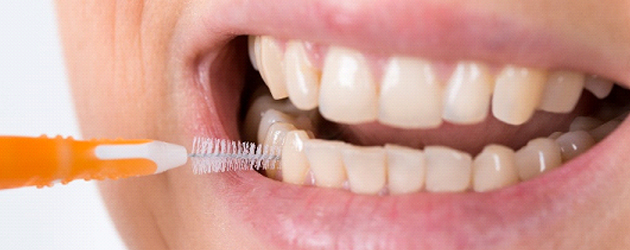
Every time you attend for a dentist or hygienist appointment, they extol the virtues of interdental cleaning. But do you know why interdental cleaning is such an important part of your oral hygiene routine? The most important part of tooth care happens at home and in this month’s blog we look at why you shouldn’t be avoiding interdental cleaning.
- How do interdental cleaners work?
Did you know that brushing alone only reaches 60% of the tooth surface? Dental plaque builds up between your teeth where a toothbrush does not reach. Plaque usually hardens on the teeth within 24 to 36 hours. If you regularly floss and brush your teeth, plaque will not get a chance to harden on your teeth. 
Regular use of interdental cleaners removes plaque, which if left can lead to tartar build up. Interdental cleaning helps to prevent tooth decay and can reduce your risk of developing gum disease.
Using interdental cleaning aids daily combined with brushing using a fluoride toothpaste can help to protect against gum disease by removing plaque and food particles, keeping your teeth and gums healthy, while giving you a beautiful smile. Interdental cleaning is essential to your smile’s health, no matter what your age.
- Other health benefits to interdental cleaning
Daily flossing doesn’t just keep your teeth healthy – practicing good oral hygiene contributes to your health in other ways, too. In fact, there’s an increasing amount of evidence linking periodontal disease to an increased risk of heart disease, diabetes, strokes, poor pregnancy outcomes and even dementia. Looking after the health of your gums through a good oral hygiene routine is even more important than ever.
- What should I do if my gums bleed?
Many people who suffer with sensitive or bleeding gums may be tempted to avoid interdental cleaning for fear of making their bleeding gums worse. But in fact, interdental cleaning can improve the health of your gums, thereby helping to prevent them from bleeding. The fact that your gums are bleeding makes it even more important that you continue with your interdental cleaning.
- What should I do first?
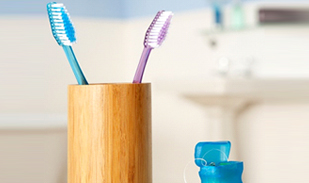 Brushing may come before flossing in the dictionary, but it shouldn’t when it comes to our oral hygiene routine. Interdental cleaning loosens bacteria and food debris from between the teeth, which allows brushing to be much more successful at removing plaque. The fluoride in your toothpaste is also better able to do its job in protecting your teeth if the plaque particles are removed first.
- When should I see a dentist?
Not only should you see your dentist for regular routine dental appointments, you should also attend if you suspect any problems with your oral health.
Your dentist can check your teeth and order dental X-rays to help identify any problems. Signs that you need to see a dentist include:
- red, swollen gums
- gums that bleed easily after brushing or flossing
- sensitivity to hot and cold
- persistent bad breath
- loose teeth
- receding gums
- tooth pain
Dental problems like cavities and gum disease are preventable, but the key is sticking with a good dental care routine. This involves regularly using interdental brushes and brushing with a fluoride toothpaste.
If you would like to find out more information on the best interdental cleaning aids to meet your needs. Call Maidstone Dental & Implant Centre today on 01622 682 029 to book an appointment with our hygienist today.





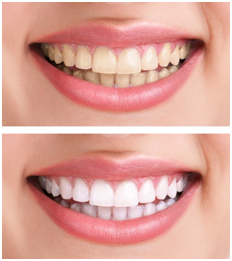
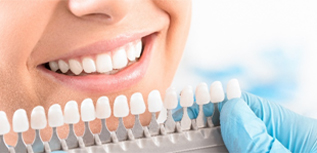 In this instance the whitening solution will either be painted onto your teeth or loaded into custom made bleaching trays and then a special light will be shone onto the teeth to help activate the bleaching solution. The treatment will normally take around an hour and during this time the procedure may be repeated with fresh solution two or three times.
 In this instance the
  The effects of
 Ring the surgery as soon as possible so that we can fit you in to one of our
  If the tooth is sharp or there is a large gap where the filling once was it is possible to use sugar free chewing gum to fill the cavity or smooth the tooth. It is also possible to buy over the counter dental cement. You should then book an appointment with your
  If the tooth has been knocked out by a direct trauma, trip or fall, if possible, try to put the tooth back into the socket ensuring that it is the right way around. If this is not possible store the tooth in a container of body temperature milk. If there is severe bleeding apply direct pressure to the area and in all cases, seek immediate dental help. There is the greatest chance of a successful restoring the tooth if you can see a
  If you lose one of your
 1. Smoking and Alcohol
 3. Diet