

6 habits which can harm your teeth

1.Brushing too hard

Brushing too vigorously can cause more harm than good, as over time the outer surface of your teeth is brushed aware. This can lead to sensitivity and can in the long-term cause cavities.

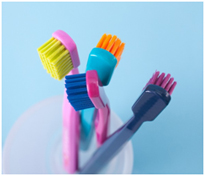
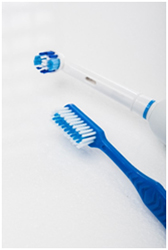
Most dentists recommend that you use a soft bristled manual toothbrush or an electric toothbrush to make sure that you do not cause damage to your teeth. You should aim to brush your teeth at least twice a day using a fluoride toothpaste and use interdental cleaning aids to clean between teeth daily. 

2.Acidic food and drinks

Do you always have a fizzy drink close at hand? Or do you have a love of all things citrus? The high acidity in these foods will wear away the tooth enamel over time. Dental erosion is the loss of enamel and dentine as a direct result of the acid contained within what we eat and drink. 

In order to help limit the damage to your teeth, try to limit acidic food and drink to mealtimes. When drinking fizzy drinks, try to drink them in one sitting rather than sipping them continuously throughout the day and use a straw to limit the amount of time your teeth are exposed to the sugar and acid in the drink. 

3.Tooth grinding

Some people may find that in times of stress they clench their jaw or grind their teeth. Clenching and grinding puts a great deal of pressure on your teeth and over time you will notice your teeth may begin to fracture and break. You may also notice that your teeth may start to wear down. 

If you suffer with jaw clenching or tooth grinding, speak to your dentist and they will be able to assess your teeth and determine the best treatment options.

4.Using teeth as tools 

Many people will admit to using their teeth to tear tape, open packages or to take the tags off clothing when they couldn’t find the scissors. However, your teeth are designed to chew food, help you speak and fill and define your facial features. They are not designed for other jobs. 

Using your teeth in this way can damage existing dental works and lead to your teeth becoming chipped or cracked. It is definitely worth spending a few more minutes searching for the scissors than have to undergo expensive dental restorations.

5.Nail biting

Biting your nails not only affects the appearance of your hands, but it can also damage your teeth. People who bit their nails will often have the habit for may years, with it exacerbated at times of stress. 

Regularly biting your mails can cause your teeth to shift and may overtime cause your teeth to break or splinter.

6.Smoking

Cigarettes and tobacco products can stain teeth, cause gum disease and periodontal disease and even lead to decayed and lost teeth.

The only way to improve this is to look to quit smoking. Your dentist will be able to advise you on services available in your area to help you quit for good. 

If you would like further help and advice on how your habits may be harming your teeth, call Maidstone Dental & Implant Centre on 01622 682029 and book an appointment today. 

Why does the dentist use x-rays?

X-rays also known as radiographs, are an essential part of any dental care treatment plan. X-rays are used to diagnose early signs of tooth decay. Teeth and bones are very dense, so they absorb the x-rays while the x-rays pass more easily through gums and cheeks to give a clear view of the health of your teeth, jawbone and supporting tissues.

Use of X-rays

Early tooth decay does not show many physical signs. X-rays are able to detect decay under fillings or between teeth in areas that are not visible to the naked eye. They will also show abscesses and infections in the roots of teeth. They also enable the dentist to determine the level and health of bone present in your jaw. This is especially important prior to orthodontic or dental implant treatment as it can affect the success of any treatment.

In children x-rays can also help to show where their adult teeth will erupt or in adults where wisdom teeth are.

Types of X-rays

There are various types of x-ray. Some show one or two teeth and their roots, while others can take pictures of several teeth at once.

Some of the most common types of X-rays performed include:

  • Periapical – Provides a view of the entire tooth, from the crown to the bone that helps to support the tooth.
  • Bite-Wing – Offers a visual of both the lower and upper teeth. This type of X-ray shows the dentist how these teeth touch one another and helps to determine if decay is present between back teeth.
  • Panoramic – Shows a view of the teeth, jaws, nasal area, sinuses and the joints of the jaw, and is usually taken when a patient may need orthodontic treatment or implant placement.
  • Occlusal – Offers a clear view of the floor of the mouth to show the bite of the upper or lower jaw. This kind of X-ray highlights children’s tooth development to show the baby and adult teeth.

Not all dentists have the facilities to take all types of X-rays. If you require a specialist x-ray prior to treatment you may need to be referred to an alternative surgery. This will ensure that you receive the highest possible quality of care.

Dangers of X-rays

The radiation received from a dental x-ray is incredibly small and much less than is received from natural sources, including minerals in the soil and from our general environment. Constant advances in technology, including the shift to digital imaging plates, and the fact that the dentist will only take X-rays when they are clinically necessary mean that the risk from dental X-rays are kept as small as possible.

Frequency of X-rays

When you first attend a dental practice the dentist will recommend that you have X-rays taken, unless you have had X-rays taken very recently. X-rays help to form a fundamental part of your dental health record and the dentist will build on this every time you visit the practice. If you change dentist, your X-rays and records are not be needed by your new dentist. If they are important, our dental team will ask for your permission to have them set across or ask that you collect them from your old dentist.

After this X-rays are recommended every 9 to 24 months depending on various dental risk factors, including history of decay, age and condition of your mouth.

Pregnancy

You should inform the dentist is you know or believe that you may be pregnant prior to any treatment. They will not take x-rays until after the baby is born, unless they really have to.

REMEMBER Prevention is better than cure and that is why x-rays are used.

If you need more information or would like to discuss how dental x-rays are used during your dental treatment call Maidstone Dental & Implant Centre today on 01622 682029 and book a consultation.

Top tips for fresh breath

In this month’s blog we look at some top fresh breath tips, to ensure that with a little diligence, your mouth can smell as pleasant as the smile it sits behind.

1.Brush your teeth twice a day

Brush your teeth for at least two minutes twice a day using a fluoride toothpaste. This helps to remove plaque and food debris which if left can provide a breeding ground for bacteria. Don’t overdo things, though. If you brush too hard you can wear down your teeth, making them vulnerable to decay.

2.Change your toothbrush regularly

Brushing your teeth builds a foundation for good oral care, and promoting fresh breath is part of the process. But you need to make sure you’re using a good toothbrush. It is important that you replace your toothbrush every three months or sooner if the bristles become worn.

3.Use interdental cleaning aids

Using interdental cleaning aids such as floss or interdental brushes helps to remove food that may become trapped in areas that brushing alone misses.

4.Don’t forget your tongue

Although brushing and flossing are staples of oral care, the tongue however is often neglected. Use your toothbrush or ideally a tongue scraper to help clean your tongue and tame the bad breath it causes.

5.Rinse your mouth

Besides freshening your breath, a mouthwash adds extra protection by getting rid of bacteria. A fresh minty taste can make you feel good. But be sure the mouthwash you choose kills the germs that cause bad breath and doesn’t just cover up the smell. Rinse daily with a good mouthwash and stop bad breath at its source.

6.Chew sugar free chewing gum

Chewing sugar free chewing gum helps to stimulate saliva flow. The saliva helps to wash away any food debris and bacteria that can cause bad breath.

7.Stop smoking

Smoking contributes greatly to bad breath. Tobacco dries out the mouth and can leave an unpleasant smell that lingers even after brushing teeth.

8.Drink water

Be sure to drink a sufficient amount of water to avoid dry mouth. Drinking water will help to keep odour under control because it helps wash away food particles and bacteria

9.Visit the dentist for regularly appointments

Attend for regular dental appointments as the dentist will be able to identify any problems which may be exacerbating your bad breath such as infections or gum disease.

Bad breath is one of life’s annoying little quirks. As unpleasant as it is, following these fresh breath tips will help to make your mouth healthier avoiding any potentially embarrassing situations.

If you would like further help and advice to prevent bad breath, call Maidstone Dental & Implant Centre on 01622 682029 and book an appointment today.

Dental implants – still not convinced?

Over the past few years there has been tremendous growth in the number of people turning to dental implants to replace missing teeth. In this article we look at the reasons for this.

Next best thing to natural teeth

Dental implants provide the closest possible replacement, currently available within the dental industry, to your natural teeth. As the field develops and evolves new treatments are introduced to help combat many of the problem’s patients face when trying to maintain their natural smile.

Long lasting and hard wearing!

Dental implants are strong and stable and if cared for properly should last for at least 10 years. Other restorations if looked after properly should last for 5-10 years, however after time they will need to be replaced and so overtime this may mean that they can work out more expensive than the initial outlay on a dental implant.

Enjoy life with no need to worry about your teeth!

Other options such as bridges or dentures can interfere with eating, smiling, speaking and other activities but with implants you do not need to worry. Once in place they should be indistinguishable from your natural teeth. They will function in the same way as your natural teeth so there is no need to worry about struggling to pronounce everyday words.

Retain your natural teeth

Bridges require that the teeth on either side of the missing tooth are prepared and crowns put on them. This means damaging healthy teeth. Dental implants are totally self-supporting and this means that there will be no effect on the teeth on either side of the gap. Dental implants will also help to prevent the remaining teeth from moving or shifting into the gap caused by the missing tooth which in the long term can lead to complications with your bite.

Feel full of confidence and ready to take on the world!

Dental implants can give you your confidence back. There will no longer be any need to worry about missing teeth or worry about moving dentures. You will be able to join in the fun, with dental implants you will be able to get on with life and not let your teeth rule your decisions.

Eat a full and varied diet

You will no longer need to worry about the food you eat. With dental implants you will be able to eat a full and varied diet. You will not need to worry about the menu when invited to a friend’s for dinner or when you are out celebrating a special occasion, you can have your pick of the dishes.

Protect your healthy bone

When teeth are extracted there is a risk of loss of bone or deterioration of your jawbone. When not being used your jawbone loses its strength and firmness. Dental implants are the only restoration that help to preserve and stimulate bone growth, helping to keep your jaw in tip top condition for many years to come.

High success rate

Dental implants have be tried, tested and adapted over many years and can now show a long track record of being reliable and providing long term successful outcomes. Dental implants can often give more guaranteed results than bridgework, removable appliances or retreatment of root canals.

Here at Maidstone Dental & Implant Centre we provide 0% finance options to help interested patients spread the cost of dental implant treatments if they wish and we also regularly have special offers on dental implant treatment.

With all these benefits why wait any longer to see if dental implants are the right treatment to restore your missing teeth. Call Maidstone Dental & Implant Centre today on 01622 682029 to book a consultation.

Keeping your teeth white following teeth whitening

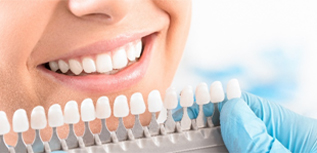
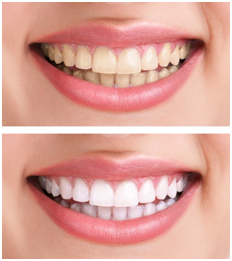
Teeth whitening is an effective way of lightening the natural colour of your teeth without damaging the teeth themselves. Treatment can be completed at home or in surgery by our trained team of dentists and hygienists and can be designed to fit around your schedule. Our dentists and hygienists are qualified to offer the best form of whitening treatment that meet your individual needs. Maidstone Dental & Implant Centre uses the most advanced teeth whitening materials provided by Pola, Zoom and Enlighten, all world leaders in teeth whitening products and systems. Results can be seen in as little as 2-3 weeks.

The effects of teeth whitening can last up to three years, but most people will require a top up every year to keep their teeth looking their best.

In this blog, we look at some simple ways you can ensure that your teeth stay white for as long as possible following teeth whitening.

  • Oral Hygiene Routine

It is important to ensure that you maintain a good oral hygiene routine to keep your teeth looking their best.

  • Brush your teeth for two minutes, at least twice a day with a fluoride toothpaste
  • Clean in between your teeth using interdental cleaning aids daily
  • Change your toothbrush every 3 months or sooner if it becomes worn to ensure you are cleaning your teeth effectively
  • Cut down on how often you have sugary foods and drinks. Wherever possible try to limit them to mealtimes.
  • Stopping smoking will help prevent discolouration and staining.
  • Visit your dentist for regular routine dental appointments
  • Visit the hygienist

You may want to consider an appointment with the hygienist for a scale and polish. The hygienist is able to remove calculus and plaque build-up, which if left can cause discolouration of your teeth. They are also able to remove staining caused by smoking, food and drink and other lifestyle factors. As well as providing help and advice on the best oral hygiene routine to follow in between appointments.

  • Foods and drinks which stain your teeth

The key rule to follow is that if a food or drink has the ability to stain your clothes or the tablecloth it also has the ability to stain your teeth. If you are a fan of red wine and black tea, or smoking cigarettes or cigars, expect the results to show up on your teeth. Other culprits to blame for dingy teeth include colas, gravies, and dark juices and berries.

Foods that are firm or crisp help clean teeth as they’re eaten. Apples, raw carrots and celery can all help to keep teeth white.

If you would like to find out more information about teeth whitening contact Maidstone Dental & Implant Centre, on 01622 682029 to book a consultation appointment today.

How to deal with tooth loss

No matter how well we all look after our teeth, there may come a point where it is not possible to save a tooth. No one wants to be left with a gap which can affect your confidence and self-esteem so in this month’s blog we look at the potential options to fill a space left by an extracted tooth.

Read More

Why you shouldn’t put off your routine dental appointment

Here at Maidstone Dental & Implant Centre, we understand that a visit to the dentist is no-one’s favourite outing. It is, therefore, easy to see how for so many people a routine appointment at the dentist can get placed on the backburner.

However, putting off a trip to the dentist can have a dramatic effect on your oral health. Even those who take excellent care of their teeth put themselves at risk of serious oral conditions without a regular dental examination.

Here at Maidstone Dental & Implant Centre, we have put together our reasons why you should not postpone your routine dental examination.

  • Gum disease

Gum disease can affect anyone and is currently the leading cause of tooth loss in adults in the UK. Gum disease can occur even in those who take good care of their teeth. Just because you brush and clean interdentally daily does not mean that you are using a proper and effective technique. Gum disease stems from areas missed with regular oral hygiene and once gum disease is present it is impossible to reverse the effect. However, with an effective oral hygiene routine and regular hygienist appointments it is possible to halt the spread of the disease to the point where you should be able to keep your natural teeth for life.

  • Cavities develop long before they become painful

Tooth decay occurs long before you feel any pain, so waiting until you are in pain before scheduling a dental appointment is a bad idea. By waiting too long you are far more likely to need extensive treatment such as root canal treatment, a crown or in worst case scenario the tooth may need to be extracted. The dentist will be able to detect problems as much as five years before they become painful, it is much easier to treat and reducing the need for time consuming and costly dental procedures.
 

  • Regular cleaning helps to reduce the build-up of stains

By attending for regular hygienist, it is possible to remove tartar and plaque build-up that it would not be possible to remove at home. The hygienist is also able to remove stains ensuring that your teeth remain bright and white.

  • Skipped dental appointments just mean more later

When you regular postpone dental examinations, you may think that you are saving yourself time and money, but in the end, you are just putting off the inevitable. Waiting until you experience a problem, means that you will require more extensive dental treatment in the long run, which is likely to require far more time away from work and leisure than a dental examination.

Call today on 01622 682029 to book your consultation at Maidstone Dental & Implant Centre and ensure your teeth stay as healthy as possible for as long as possible.