



Dental habits are formed at a very young age. In this article we look at Maidstone Dental & Implant Centre’s top tips to ensure that your children grow up with good dental habits.
1.Lead by example
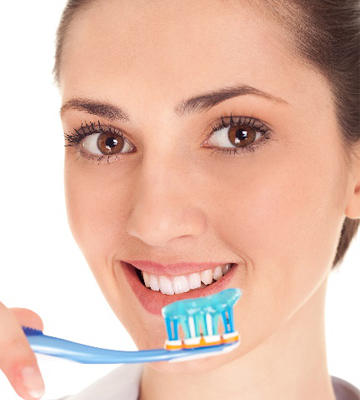
Ideally your child should see you brush your teeth in the morning and evening. If you normally do this while they are in bed, try to alter your routine and make brushing a family occasion. This may mean you brush your teeth more than twice a day, but this can only help to further improve your oral hygiene. You can even let your children help you brush your teeth, just like you help them! All children up to the age of three should have toothpaste with a fluoride level of at least 1000ppm. Older children should have toothpaste with a fluoride level between 1350ppm and 1500ppm.
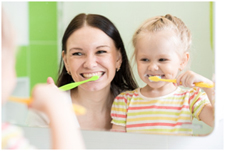
2.Make it fun
You could play one of the many toothbrushing songs available online or one their favourite songs to ensure that they brush for two minutes. This will ensure that from a young age your children understand how long they need to brush their teeth for to ensure that they remove all the plaque.
3.Incorporate technology
An electric toothbrush can be a great way to motivate children to brush their teeth. Many now include their favourite cartoon characters and also incorporate a timer to ensure they brush for two minutes. The newest technology will also link their toothbrush to specially designed apps which track how often they brush their teeth, for how long and how effectively they brush.
Even if you do not have an electric toothbrush there are a number of apps that can be used to track how often you brush your teeth.
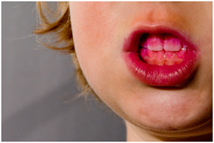
4.Show what’s being missed
Using disclosing tablets once a month can provide a great visual aid, to show those areas that are being missed. By joining in you can show that everyone misses spots sometimes, but with good brushing technique all areas can be cleaned.
5.Attend for regular dental appointments
Studies have shown that a child’s fear of the dentist is directly linked to their parents’ behaviour towards dental visits. By making sure that you bring your child in for appointments from a young age they can learn that there is nothing to fear from the dental chair. To begin with the dentist will simply get them to sit in the dental chair, first with a parent or guardian and then on their own. They may also ask if the child will open their mouth. This helps to build confidence and reduces any fear associated with the dentist. Baby teeth will begin to emerge at around 6 months and a child will have a full set of teeth buy the time they are two and a half.
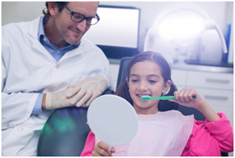
If you would like more help and advice with regard to tooth brushing for children do not hesitate to ask the dentist when you next visit. Call Maidstone Dental & Implant Centre on 01622 682029 and book an appointment today.

 practice that can address not just your oral problems but also your anxiety.
 If you suffer from severe dental anxiety,
 a love of all things citrus? The high acidity in these foods will wear away the tooth enamel over time. Dental erosion is the loss of enamel and dentine as a direct result of the acid contained within what we eat and drink.
  4.Using teeth as tools
  disease
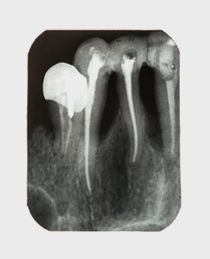 Types of X-rays
 Frequency of X-rays
 Pregnancy
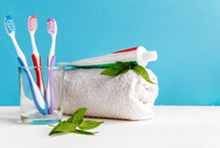 2.Change your toothbrush regularly
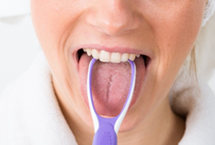 4.Don’t forget your tongue
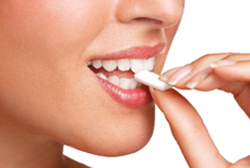 6.Chew sugar free chewing gum
 9.Visit the dentist for regularly appointments




 The key rule to follow is that if a food or drink has the ability to stain your clothes or the tablecloth it also has the ability to stain your teeth. If you are a fan of red wine and black tea, or smoking cigarettes or cigars, expect the results to show up on your teeth. Other culprits to blame for dingy teeth include colas, gravies, and dark juices and berries.